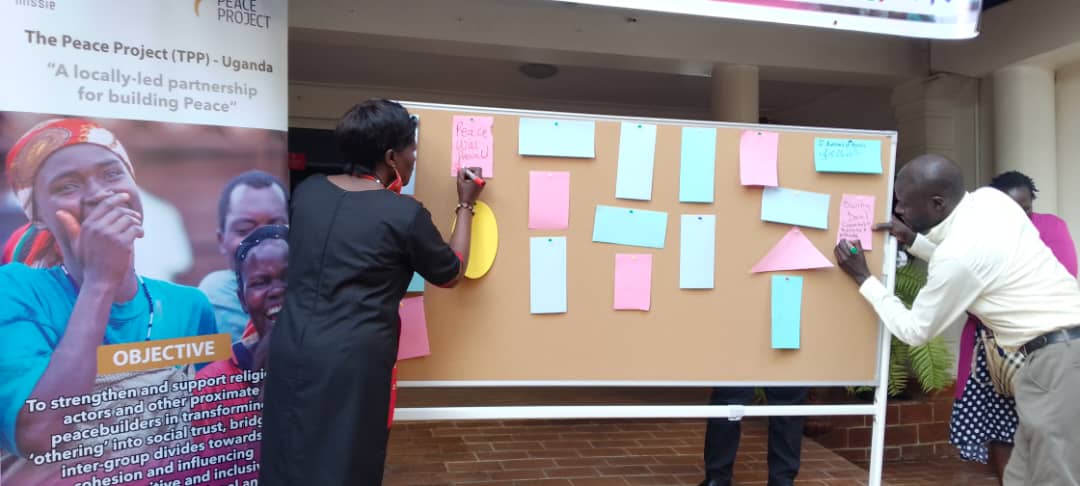
The Peace Project supports local peacebuilders in transforming communities from
within. Our work focuses on three interconnected pillars that together help reduce
conflict, rebuild trust, and create lasting change.
Pillar 1: Convictions
Othering
→
Trust
Harmful convictions and practices are fundamental contributors to conflict
dynamics, from outbreak to escalation and recurrence of conflict. Mistrust and
dehumanisation of the perceived "other" or enemy are prevalent, often fuelled by
vested interests of religious institutions, politicians, and social media. The
Peace Project addresses this through trauma healing and by promoting inclusive,
alternative narratives.
In Uganda: trust is rebuilt through individual, group, and
communal trauma therapy that connects people with their innate potential and
improves mental wellbeing. Religious leaders and young people are empowered to
advocate for inclusive narratives and positive storytelling.
Pillar 2: Connections
Divide
→
Cohesion
Ethnic or religious identities can be manipulated to exacerbate conflicts, and
intractable conflicts emerge when such conflicts are perceived to be linked to
these identities. Limited interactions create tensions between communities,
fostering prejudices. The Peace Project focuses on interaction between
religious, ethnic, and generational groups, emphasising dialogue and practical
cooperation.
In Uganda: social cohesion is cultivated through dialogue and
meaningful interaction between diverse ethnic and religious groups. Local women
leaders, young people, and religious leaders are equipped to enhance
socio-economic conditions and build strong relationships with local authorities
and service providers.
Pillar 3: Conditions
Exclusion
→
Inclusion
Decision-making and security practices and policies that lack inclusivity
contribute to the divide between conflicting groups. Security approaches are
often based on detection and repression, perpetuating division and weakening
community resilience. The Peace Project promotes fair and inclusive legislation
and lobbies for context- and conflict-sensitive peacebuilding support.
In Uganda: advocacy connects local experiences with
policymakers in peacebuilding, security, and stability — specifically focused on
implementing laws that support women's rights, inheritance and land rights, and
access to mental health services.