21 September, 2026 · Peace Project
There used to be a fire. Every evening in villages across Atiak, someone lit one outside the compound, the signal that an issue needed talking through. People called it wang oo. Ask around today and you will hear the same thing again and again, almost like a confession. Nobody lights the fire anymore.
This is the story of what happens when a community notices that, and starts trying to relight it: what RACI found when it finally asked what was driving conflict here, who it watched turn from someone who could not handle a dispute into someone the whole community trusted with one, and what people said, as recently as last week, once they finally had the room to say it out loud.
On September 21, the world marks the International Day of Peace. For RACI, this is the story of the year that followed.
What We Found When We Finally Sat Down to Listen
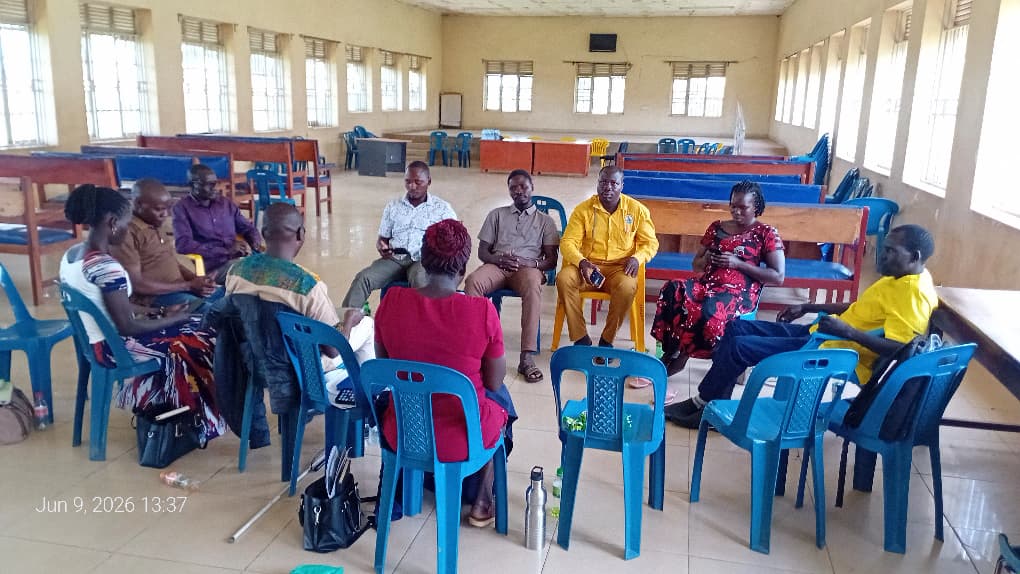
Between 21 and 23 July 2025, RACI sat down with people across six villages in Atiak Town Council and Sub-county: Acopele, Pupwonya, Pacilo, Kibogi, Parwaca, and Kal Atiak, and asked a blunt question: what is actually driving conflict here? Eight community members, four men and four women, answered honestly, and every single one rated conflict in their area as high. Land disputes topped the list, tangled up with poverty, population pressure, and tension along the South Sudan border. Cattle theft, the manipulation of community members who cannot read the documents put in front of them, and unregulated grazing by outside pastoralist groups known locally as Balalo were flagged as fast-growing problems.
Existing mechanisms were still working. Mediation by clan elders was rated 4 out of 5 for effectiveness. Formal courts and police, only 2 out of 5. The report's recommendations, sensitize communities on land rights, create opportunities for unemployed youth, invest in trauma healing, bring women and young people into peacebuilding roles, became the roadmap for the year that followed.
When Rumour Very Nearly Won
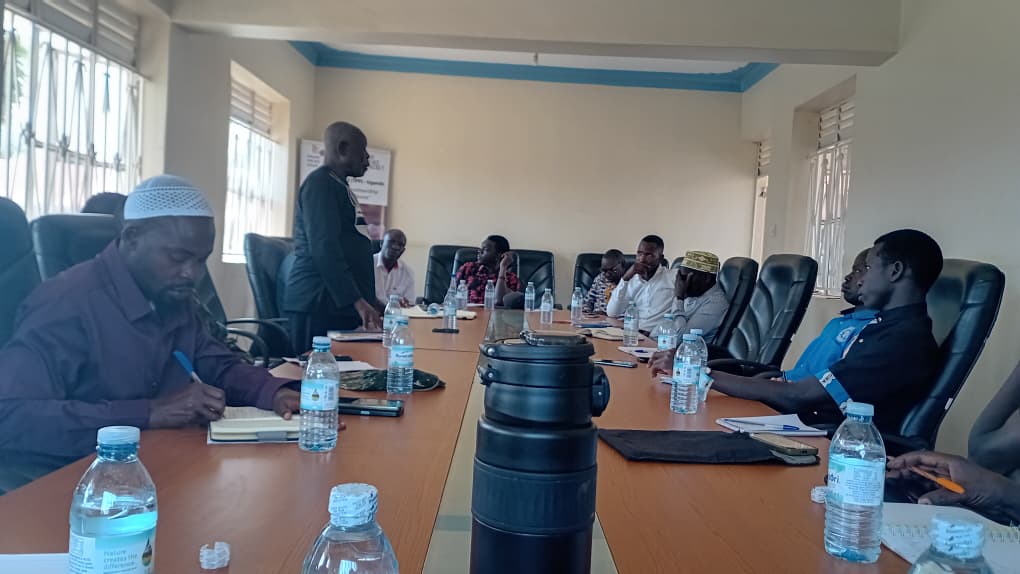
On 21 December 2025, after unrest between Muslim and Christian communities in Yumbe Town left property damaged and families displaced, RACI joined MCJL, ARLPI, JPD, THP, and CAPACITA to convene an inter-religious dialogue. The room brought together the Resident District Commissioner, the District Kadhi, Christian religious leaders, local council members, youth, security officials, journalists, and cultural leadership from the Aringa Kingdom, people who do not often sit at the same table.
The clearest conclusion was also the simplest: the unrest was not really about religion. It was about misinformation, weak early-warning systems, and narratives twisted for political ends. Participants agreed to strengthen interfaith councils, push for more responsible media coverage, support trauma healing, and invest in youth peace education ahead of upcoming elections. Religious, cultural, and security leaders stood together to publicly condemn the violence, a small but significant act of unity.
Two People Who Chose a Different Path
Reports and meetings matter, but peace is carried by people. Two stories from this year show what that looks like up close.
Douglas Oketayot lives in Kibogi Ward, Atiak Town Council. Before RACI's Peace Project training, land disputes and family conflict were a constant weight on his life. Through the training, he picked up mediation, community mobilisation, and inclusive leadership skills, and something in his own values shifted too.
"The training made me a God-fearing person who intends to work with the community without gender discrimination. This fostered community trust that eventually led to my election as Area Councilor III."
— Douglas Oketayot
Today he mediates land and domestic disputes and mobilises people around programmes like the Parish Development Model and livestock restocking.
Atim Joyce Kellen's story runs on a similar track. As District Woman Councillor for Atiak Sub-county, she was already a leader when she joined RACI's trainings, but Non-Violent Communication and gender-based violence sessions changed how she saw her own role. Not long after, a land dispute broke out between her own family and a neighbour, exactly the kind of disagreement that used to drag on for years. Instead, Joyce mediated it herself.
"Peace building is not only about solving conflicts after they happen. It is about creating understanding, communication, and relationships that prevent conflicts from escalating."
— Atim Joyce Kellen
The two parties involved now greet each other again. Both stories point to the same lesson: equipped with real skills, not just goodwill, people become the leaders their communities actually trust.
Taking the Fight to Kampala
The Atiak analysis had named land as the single biggest driver of conflict, so RACI took the issue to the people who write the policies. On 22 April 2026, RACI and Peace Project partners from Uganda and South Sudan met the Principal Lands Officer at the Ministry of Lands in Kampala. The message was direct: existing land policies are not reaching the people they are meant to protect, and that gap hits women, youth, and rural communities hardest. The Ministry did not push back. Its officer pointed to land cases dragging through repeated court adjournments, legal costs that put justice out of reach, and a land tribunal grown less efficient since moving from the Ministry of Lands to the Ministry of Justice.
That conversation set up a bigger one. On 30 June 2026, RACI returned alongside the wider Peace Project Partnership (TPP), a coalition working across Uganda, Burundi, DR Congo, and South Sudan, to discuss pastoralist encroachment, elite land grabs, and the exclusion of women and youth from land ownership. This time, the meeting closed with commitments: Peace Catalysts trained as certified mediators, tree planting promoted as a way to ease land conflict, and government bodies engaged directly on cross-border boundary disputes.
The Fire We're Trying to Relight
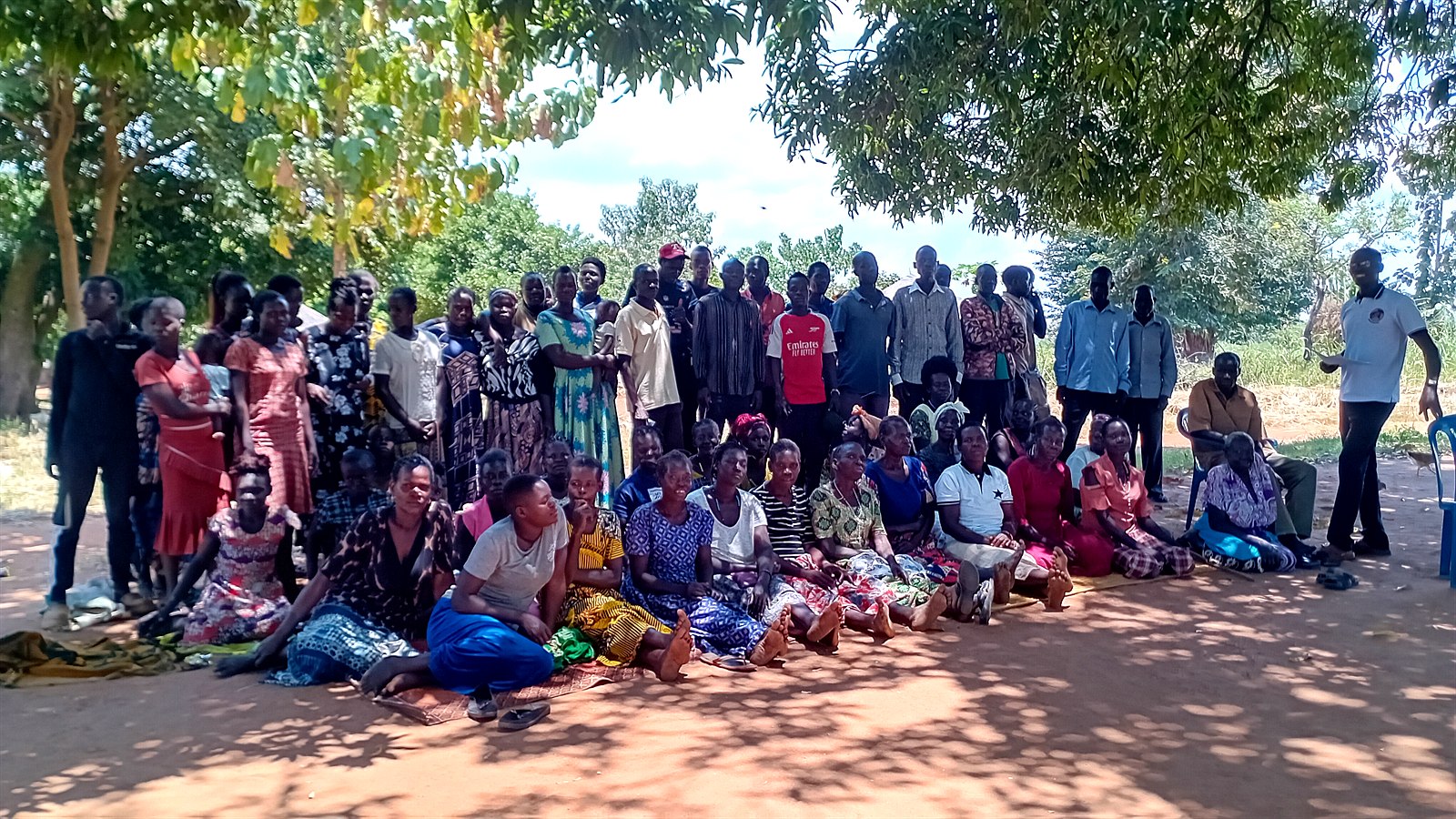
In July, RACI brought youth and elders together in Kibogi and Pacilo villages for the first honest conversation either side had had in a long time. Young people, many from local groups known as Aguu, sat across from elders, chiefs, and Local Council leaders and said plainly that they felt labelled and shut out. Elders admitted they worried about fading respect for tradition. Nobody left with the divide solved, but for the first time in a while, both sides were in the same room.
By September, RACI wanted to go deeper. On 12 September 2026, twenty-six named participants and the area's LC1 representative sat through a five-question dialogue on why trust between old and young had broken down. Land touched every single question, even the ones that had nothing to do with land on paper: young people selling land for motorcycles and phones, elders quietly selling land meant for their own children, boundaries nobody will admit the truth about, orphans losing land because no parent is left to defend their claim.
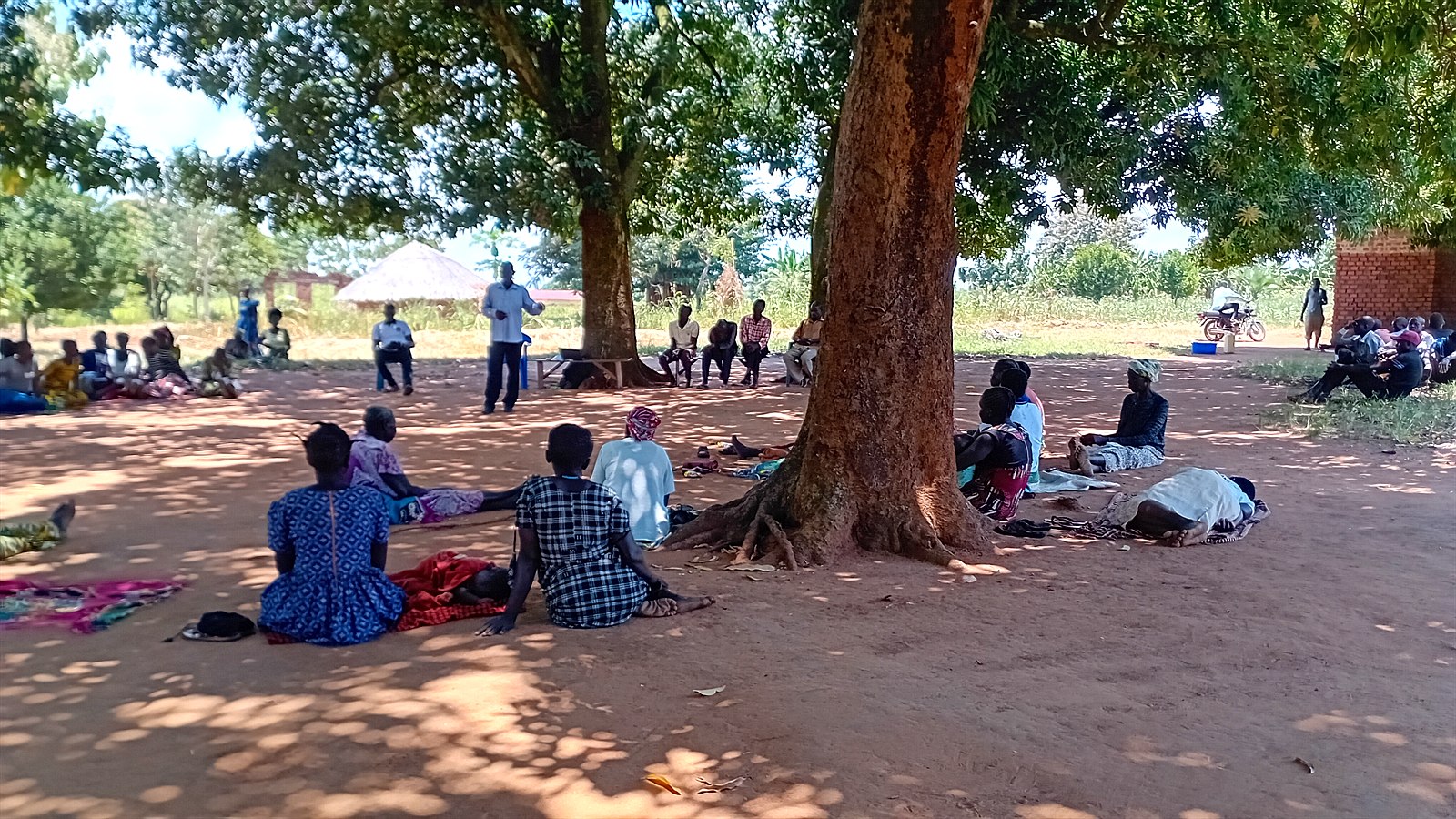
What RACI did not expect was elders turning the criticism on themselves. "The elders sometimes falsely blame the young, yet they failed to correct the young," one participant said. That kind of self-honesty rarely shows up in a first dialogue. It showed up here because people had already started practising it in July.
And then there was the fire itself. Across three separate questions, unprompted, participants kept returning to the wang oo, the evening fireplace where elders once taught and passed down family history. Somewhere along the way, it stopped being lit. Participants asked RACI to help bring it back. The LC1 representative added one more request: next time, make sure the youngest voices are actually in the room, not just the subject of everyone else's conversation about them. That is the fire this whole story is named for. RACI did not invent it. The community keeps asking for it back.
Nobody Is Just a Visitor Here
Three days later, RACI opened a very different room. On 15 September 2026, political, cultural, and religious leaders sat down for a stakeholder meeting on women's land rights. RACI opened with something leaders do not often hear from an NGO: "This is not a training. We are not here to teach you anything. We are here to ask questions that only the people in this room can answer."
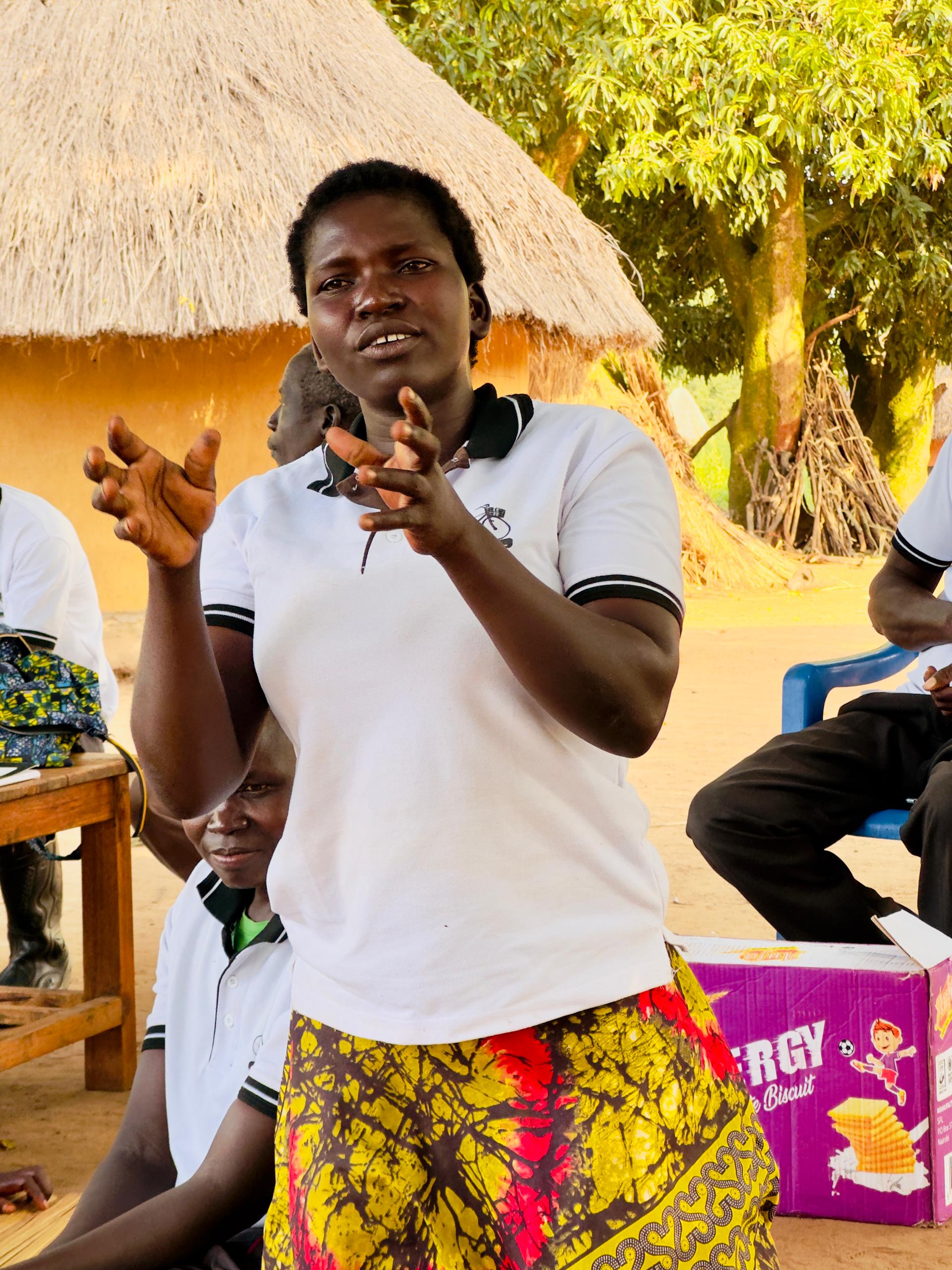
The answers were candid. Village chief Okwera Joseph, who has mediated land disputes since 2010, admitted that when a resolution favours a woman, men resist it, and cases often get pushed to higher offices that overcharge widows and orphans. Douglas Oketayot, the same Douglas from earlier in this story, pointed to land claims that rest on nothing more than the memory of elders no longer alive to confirm them. Aparo Beatrice, deputy speaker of the sub-county, insisted that in her own experience, women are heard.
"When land is sold, or when they are dividing land, the girl child is not considered, and the same applies to widows, orphans and persons with disabilities. This has to be corrected."
— Community member, RACI stakeholder meeting
Nobody in the room disagreed. By the end, each leader wrote down one specific commitment for the next three months, with a name attached and a deadline.
The Work That's Never Finished
RACI is the Ugandan partner in The Peace Project, an eight-year regional initiative running 2024 to 2031 across Burundi, DR Congo, South Sudan, and Uganda, working to turn harmful convictions into trust, division into connection, and exclusion into inclusion. None of this is finished. Land disputes have not disappeared from Atiak, and the divide between generations will not close after one dialogue. But a year ago, RACI did not fully know what it was up against here. Today, it has a clearer map, a growing number of trained mediators, a seat at the Ministry of Lands, and proof, in people like Douglas and Joyce, that training changes more than paperwork.
As the world marks the International Day of Peace this September 21, RACI's message is simple. Peace was never going to be finished by the time this article went out, not with the wang oo still unlit in most of the villages that asked for it back. But this month alone, people sat in two different rooms and told the truth, about a fire that had gone out, and about a promise owed to their own daughters. That is what building peace actually looks like up close. Not an event on a calendar. A fire, relit one match at a time.